
Pocket Guru
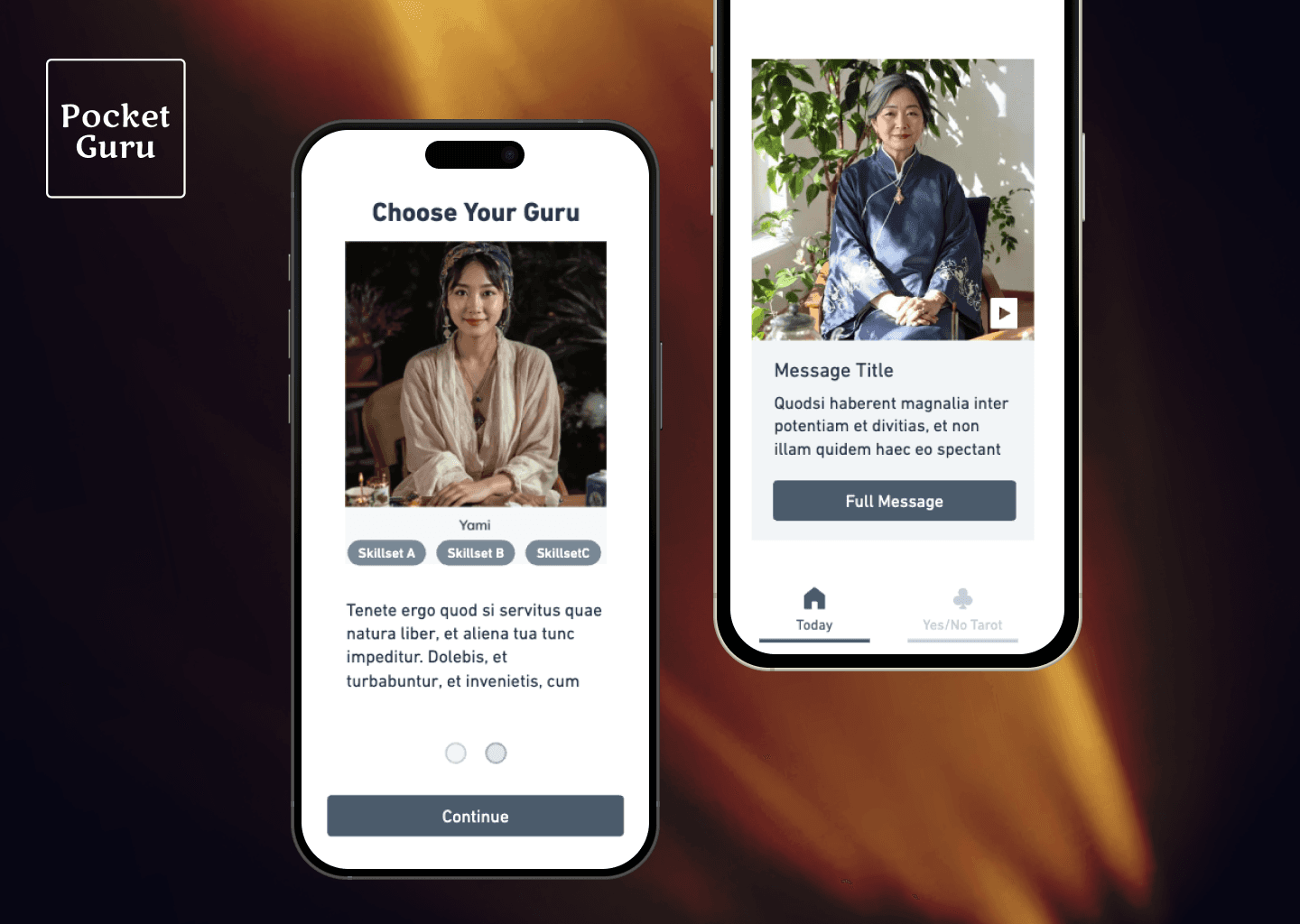
An AI fortune-telling app built in three days at a hackathon — n8n for the backend, Google Sheets as the database, and a question we kept asking: what can we cut?
Three days. One working app. Two teammates I'd never built with before.
Pocket Guru started as a shared frustration: tarot and astrology tools are either slow and expensive, or fast and emotionally hollow. We wanted the third thing. And we had 72 hours to find out if we could build it.
The stack was deliberately scrappy — n8n handling the backend, Google Sheets standing in as a database, deployed as a PWA to skip the app store entirely. None of it was precious. All of it worked. The point wasn't to build the right thing forever. It was to find out if the core experience held up before committing to anything.
The question we kept returning to: what can we remove and still have something real? That's the one I'd take out of the hackathon even if nothing else shipped. It's a better question than "what should we add next," and most product rooms never ask it.
The team split was clean — Hana on API, Miya on full-stack, me on UI/UX. Three sync-ups a day. Everything else was just building. I've been in longer meetings that produced less.
Project Outcome
Shipped a functioning PWA in three days with a team of three, each covering a distinct lane — API, UI/UX, full-stack integration. The constraint wasn't just time. It was a live argument for what "good enough to be real" actually means.
View the project live